

Description
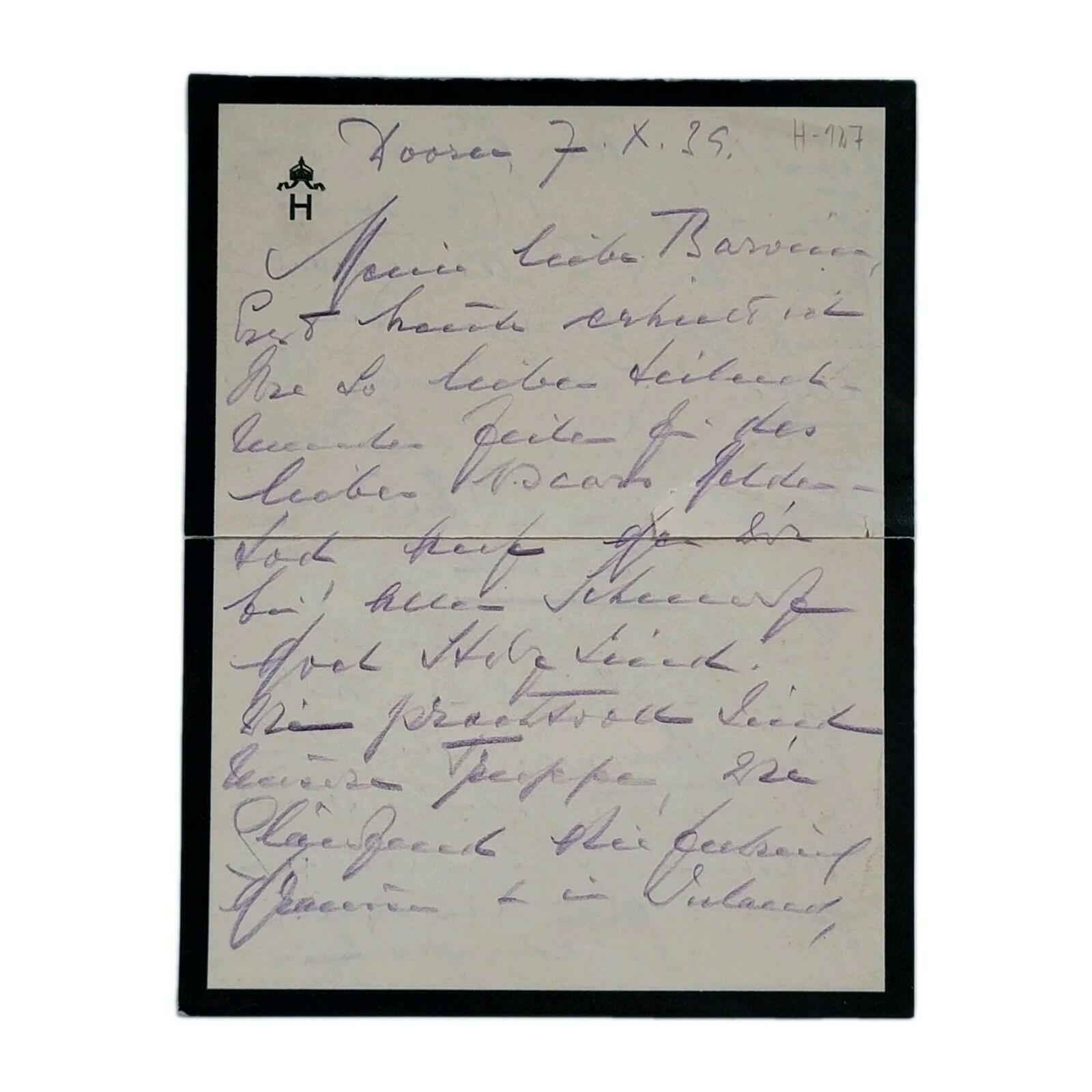
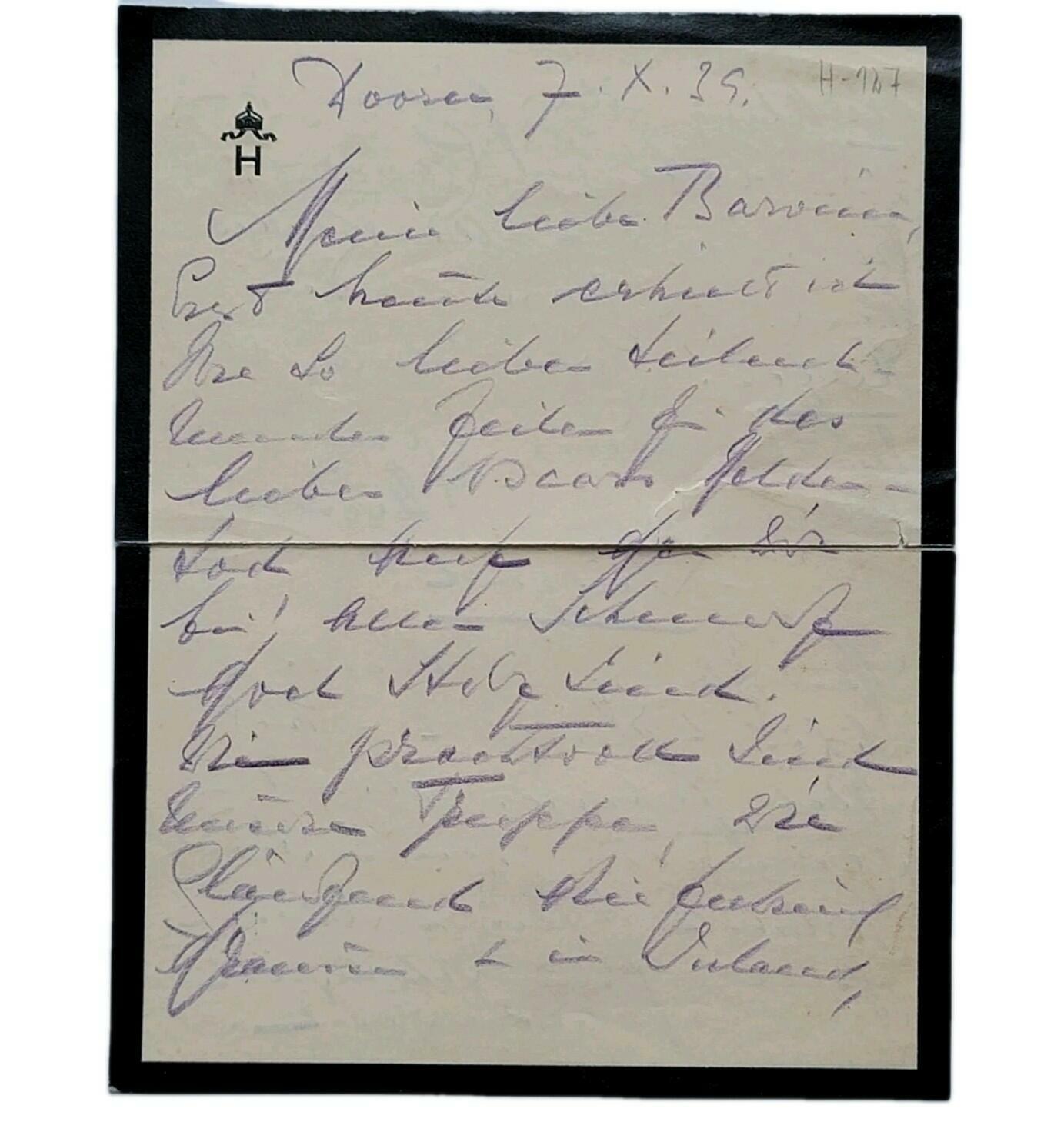
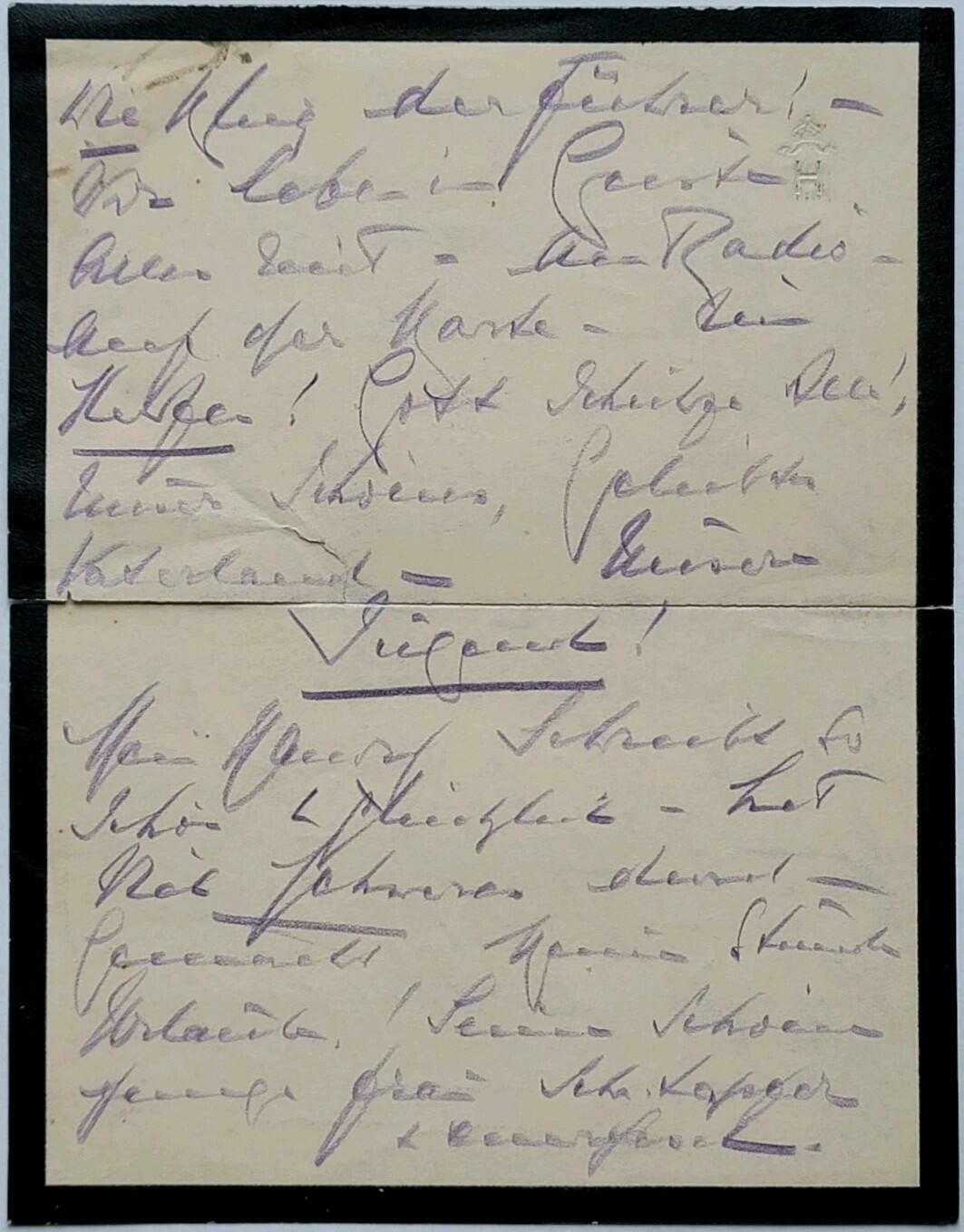
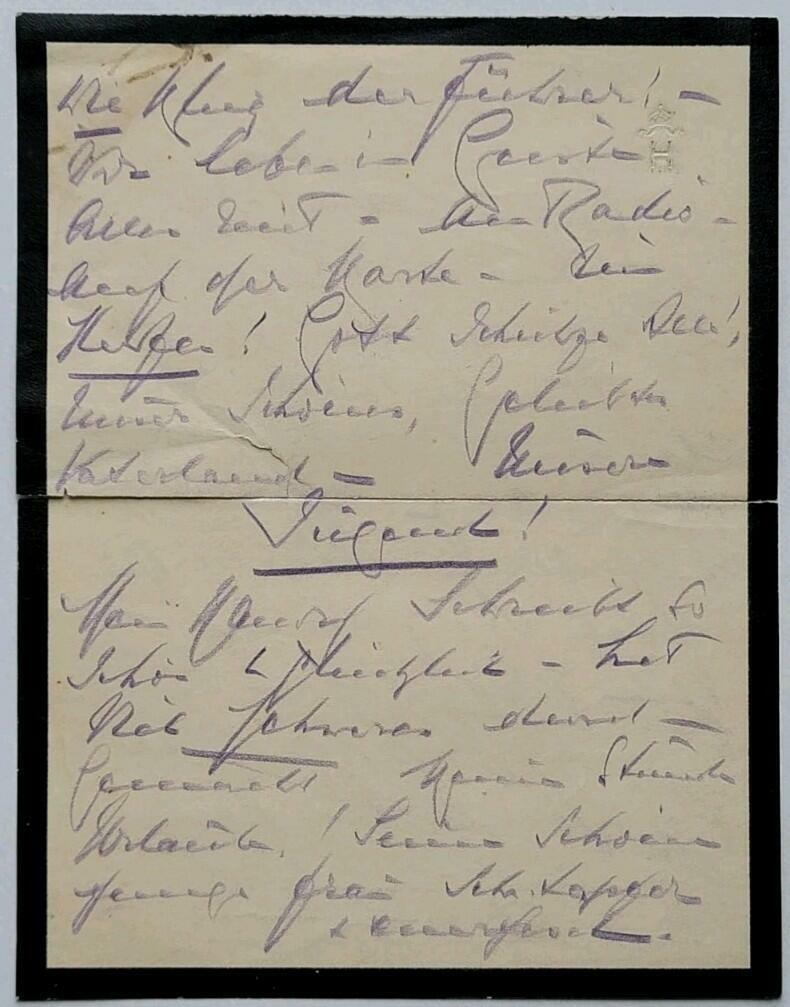
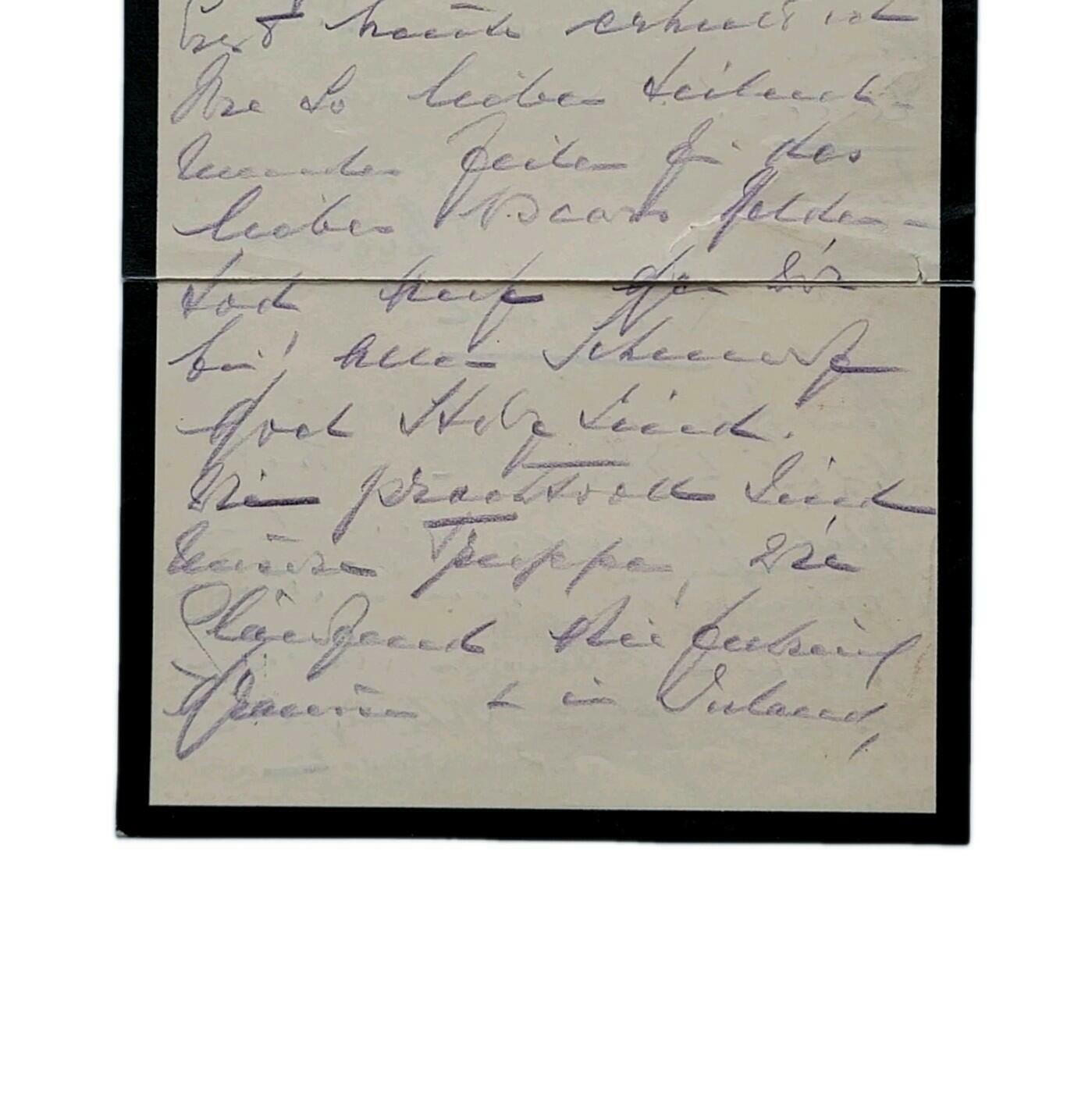
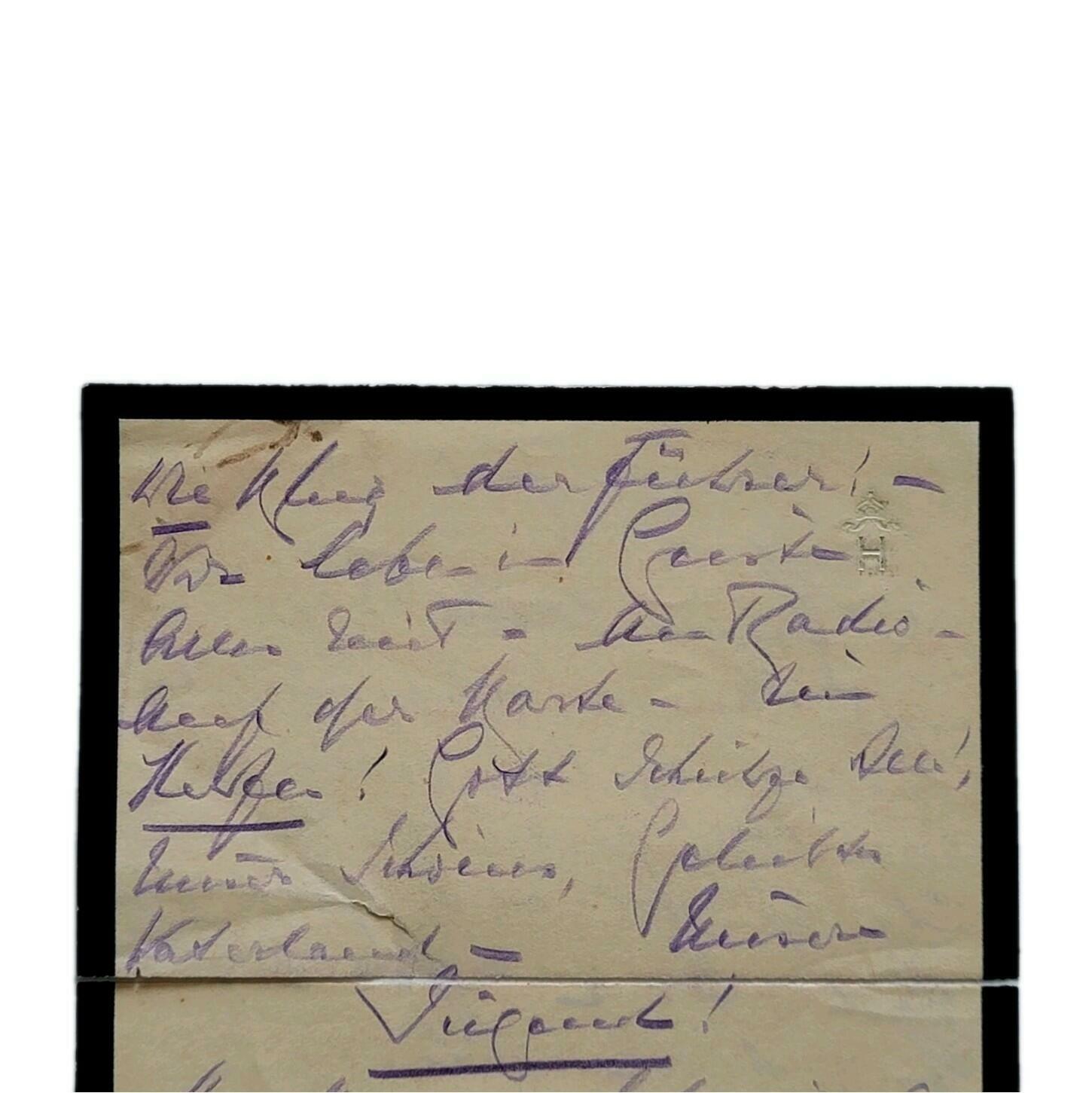
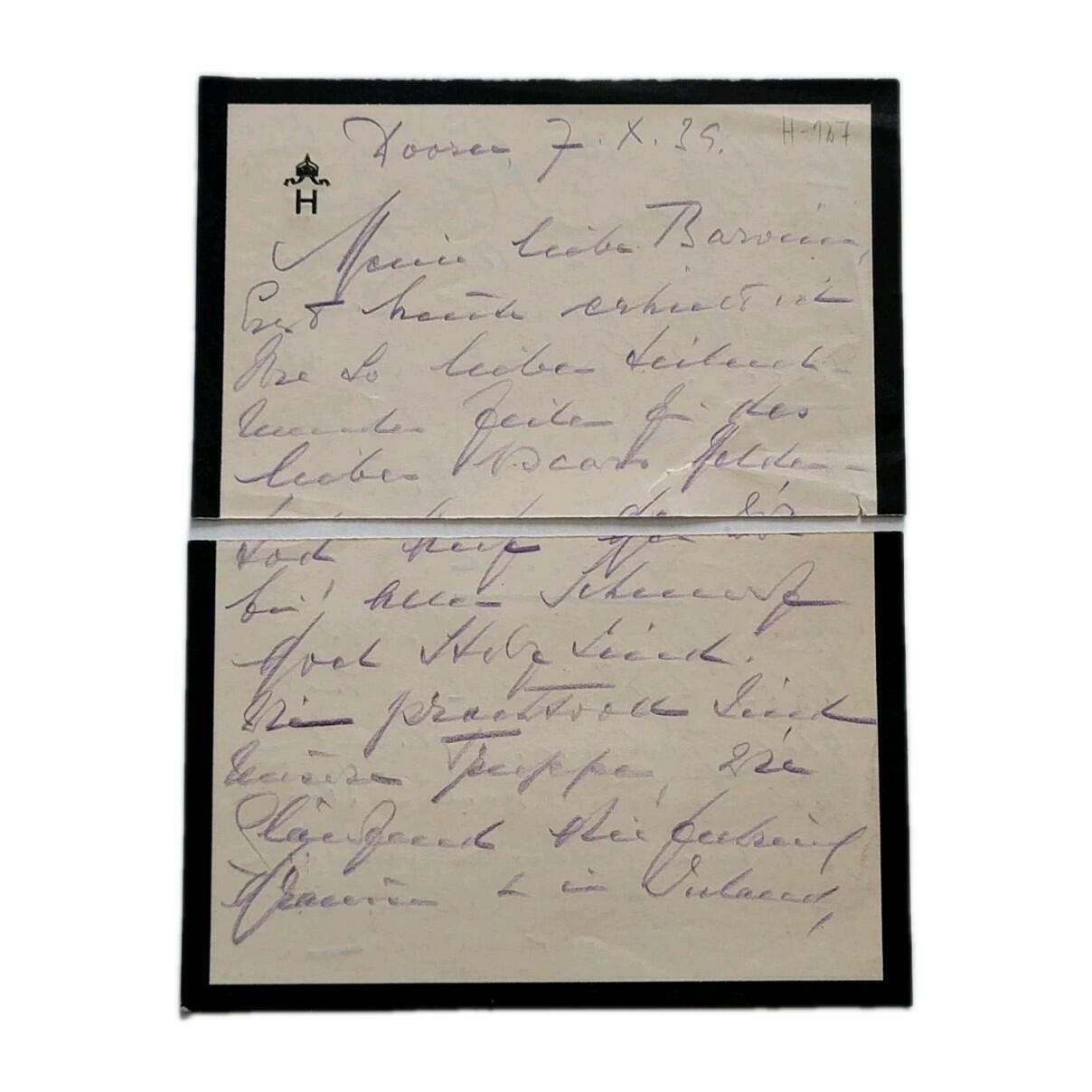
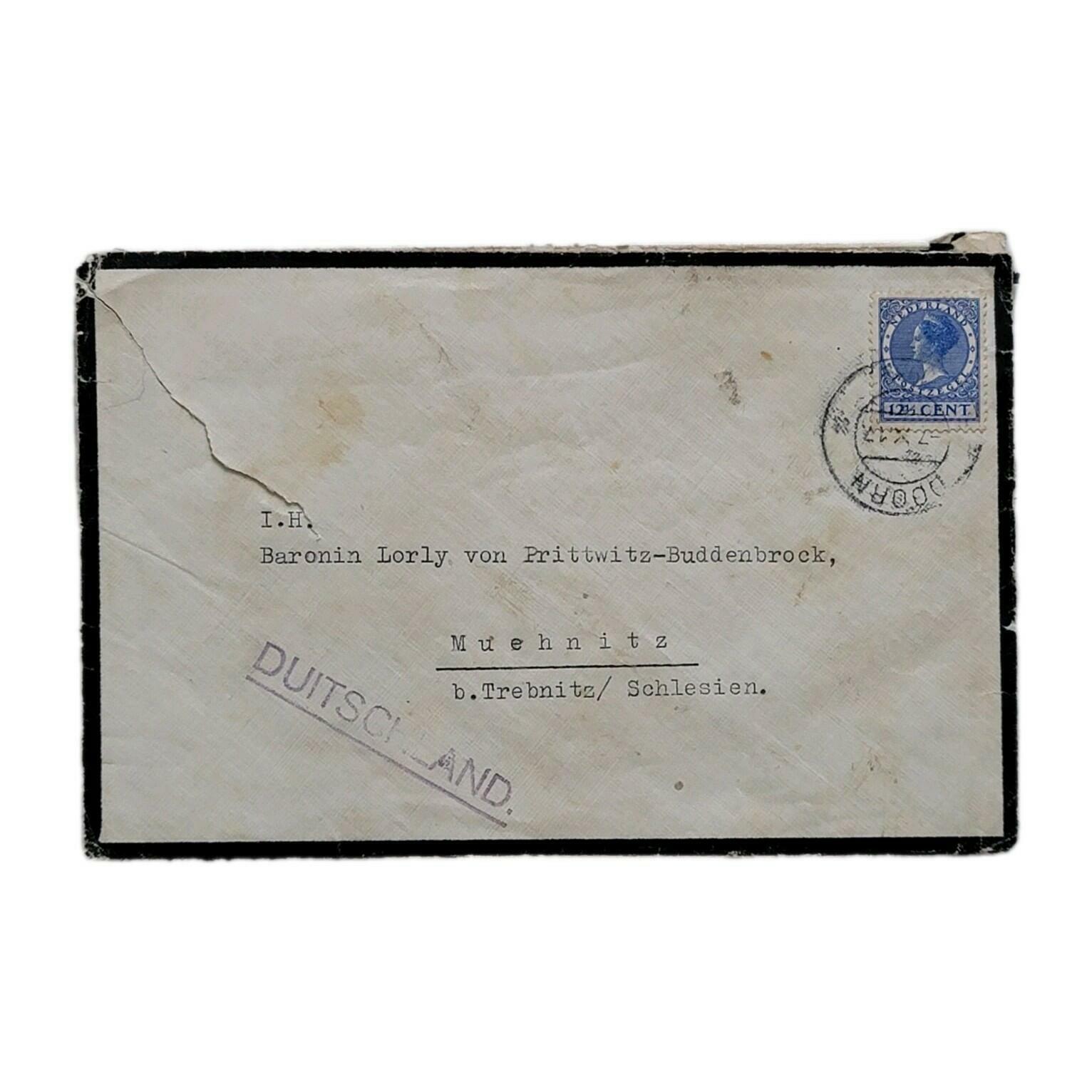
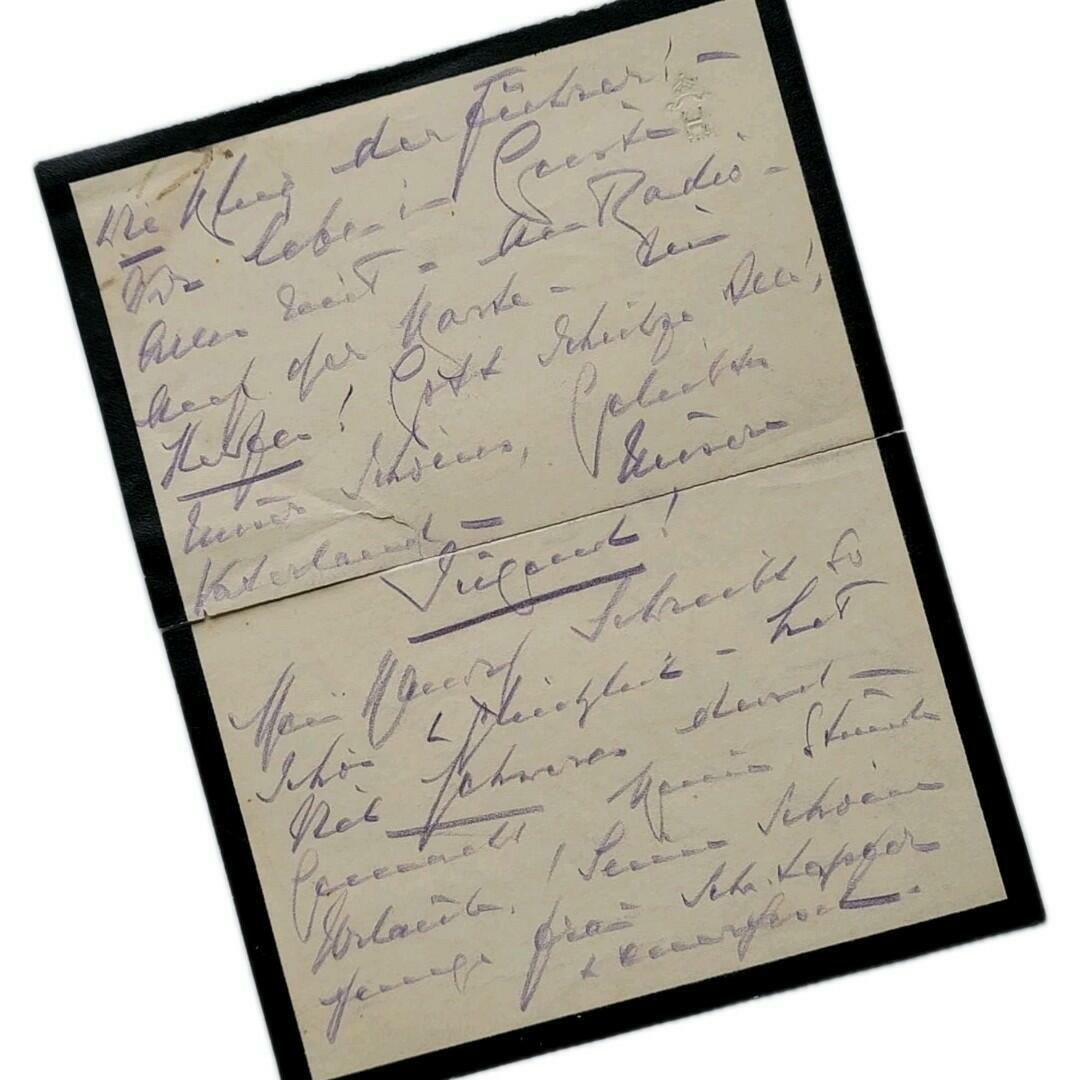
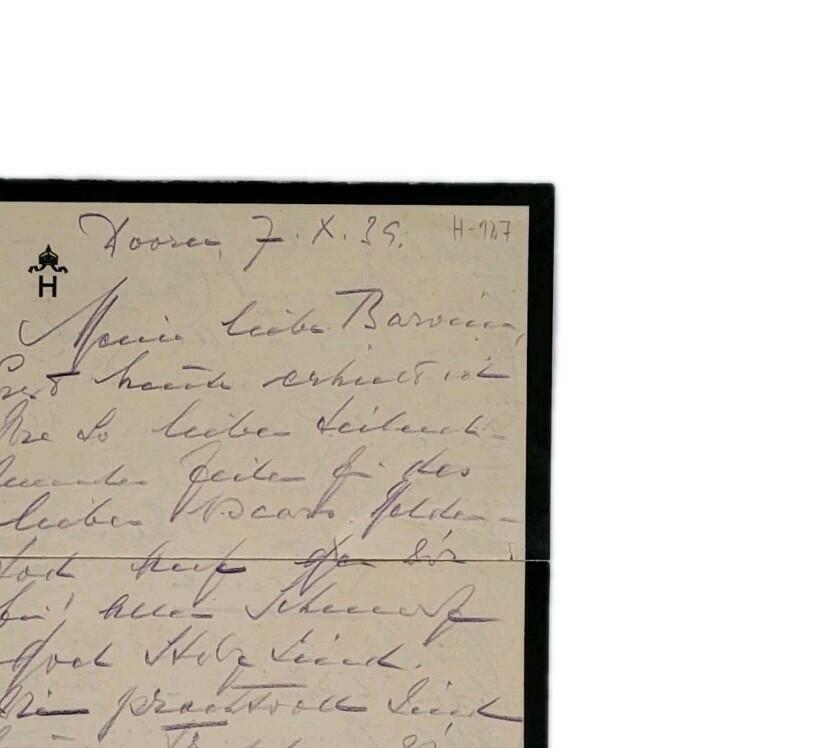
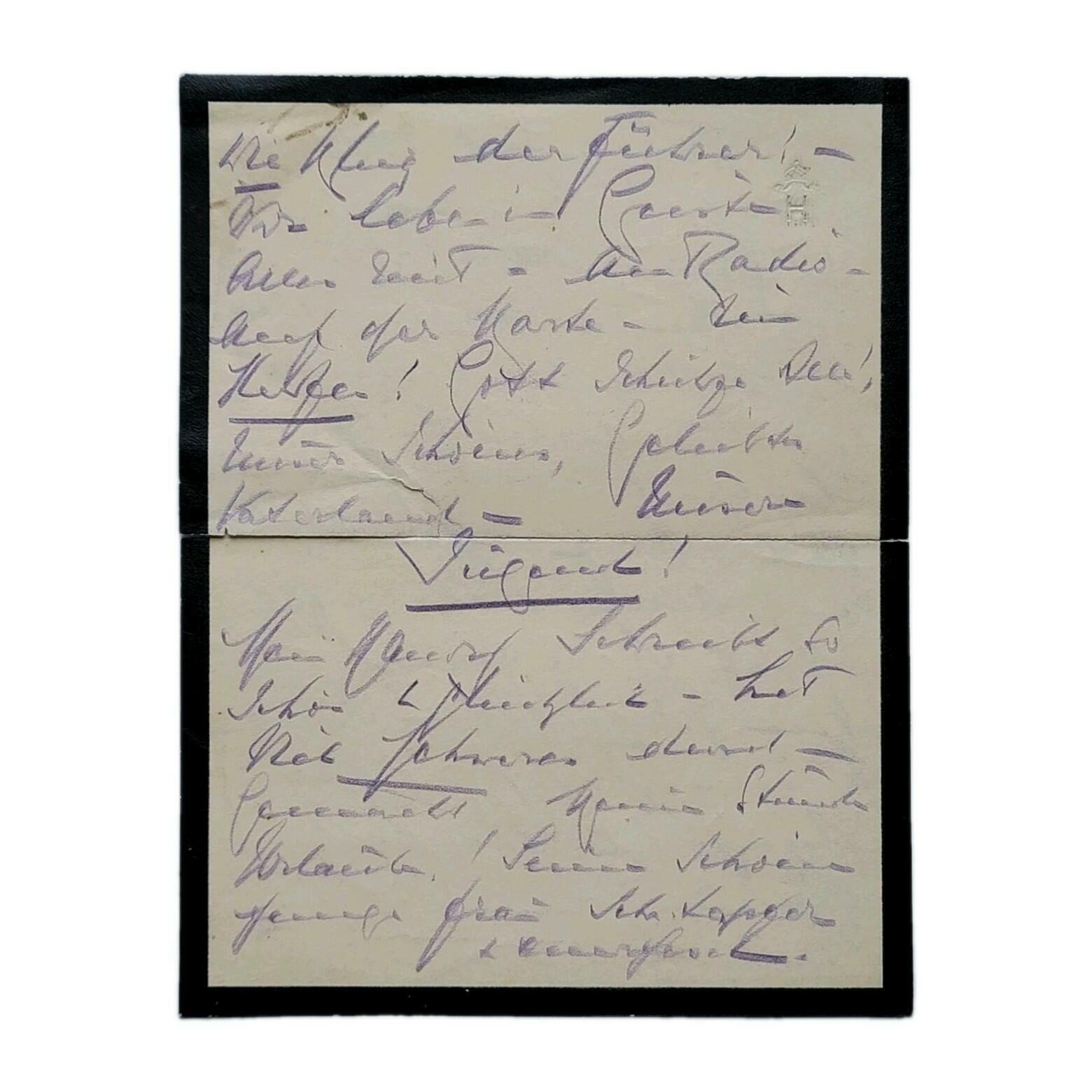
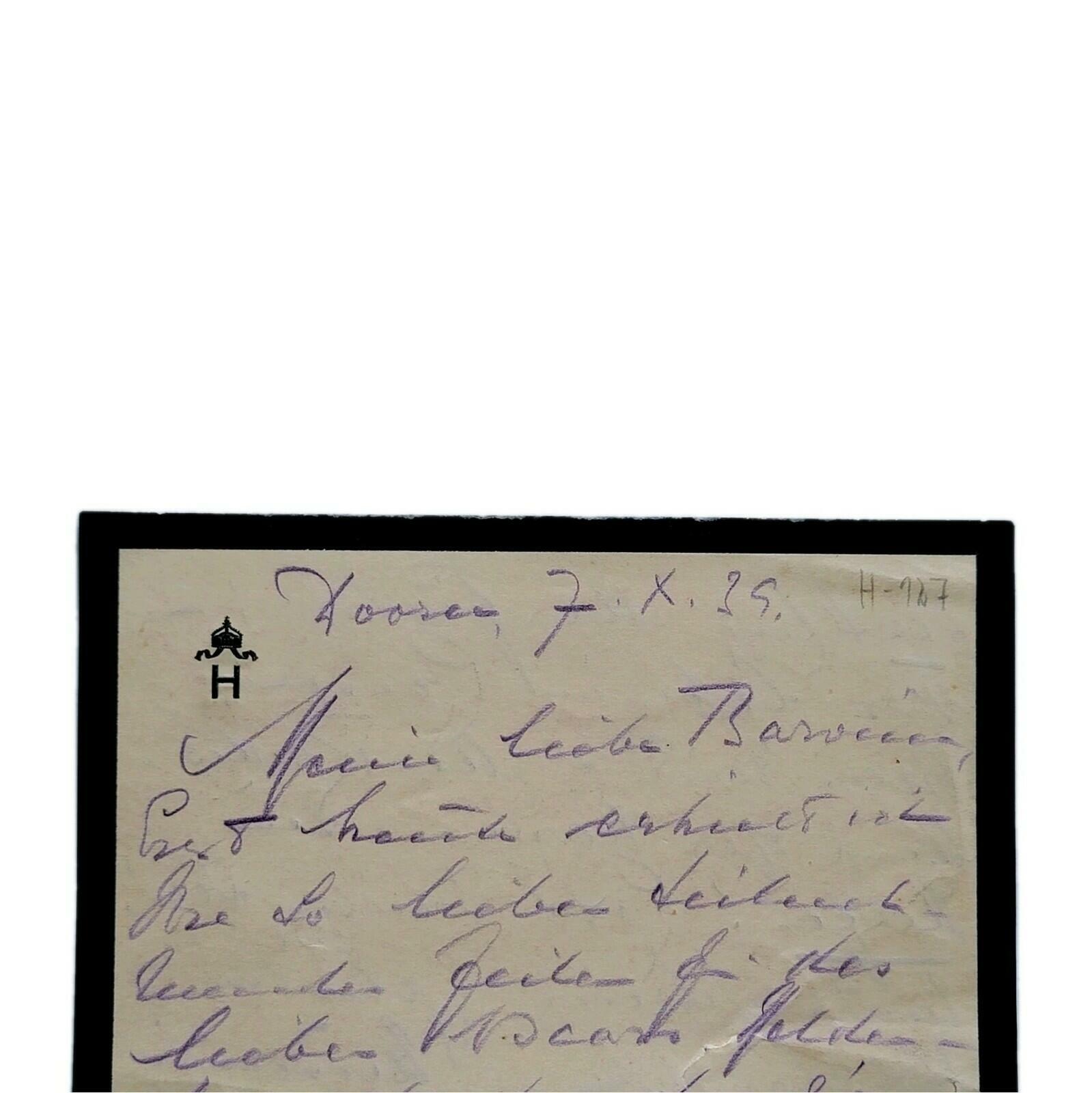
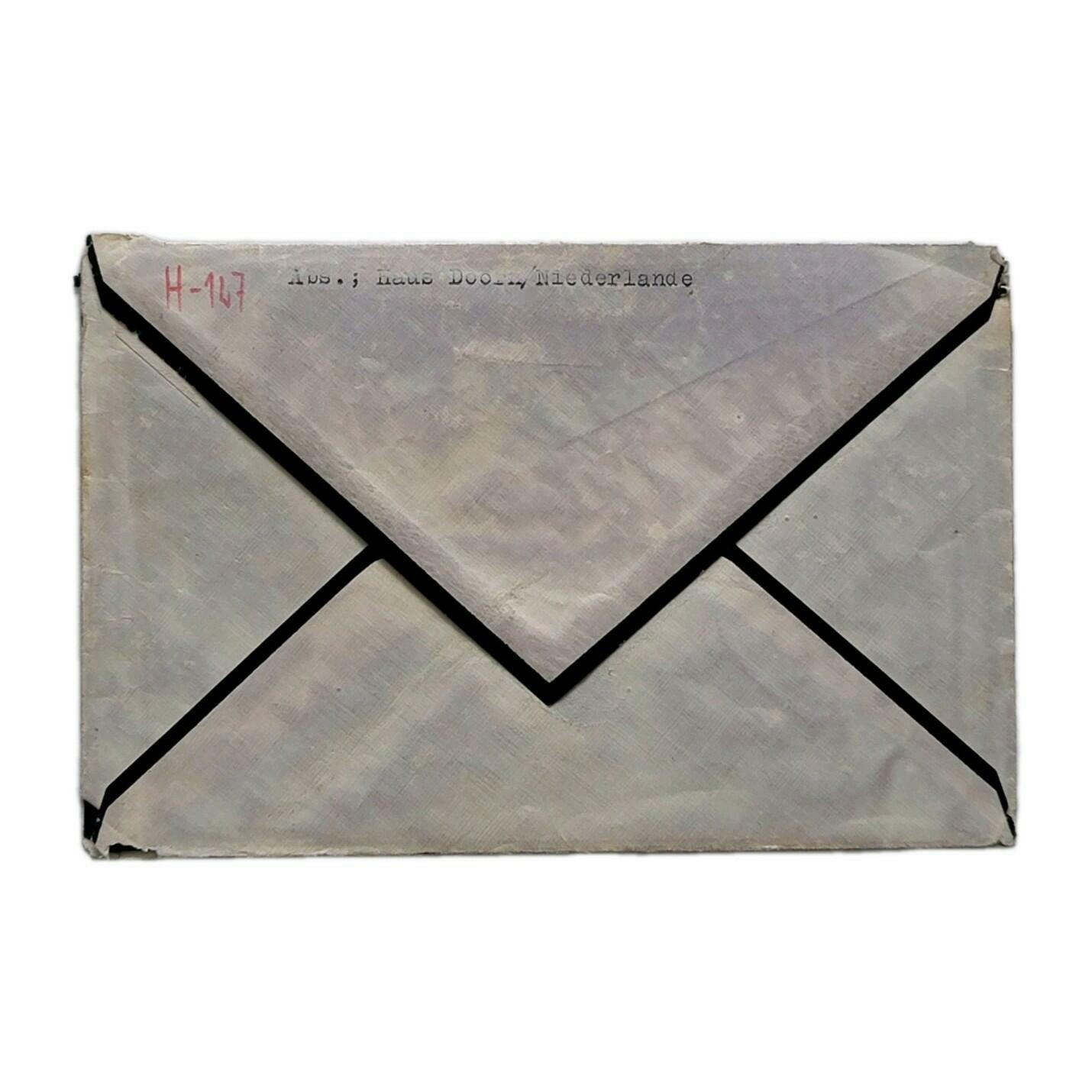
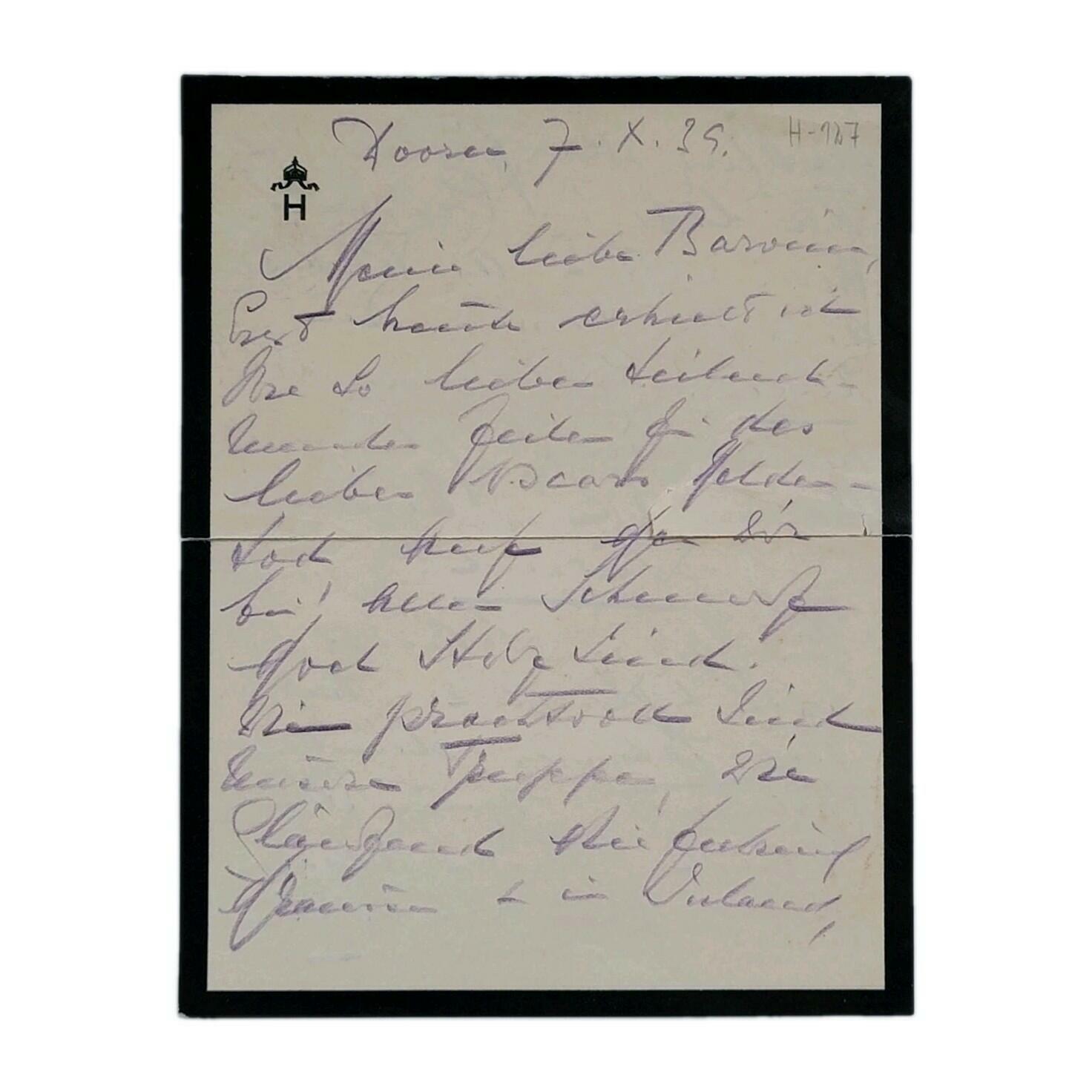
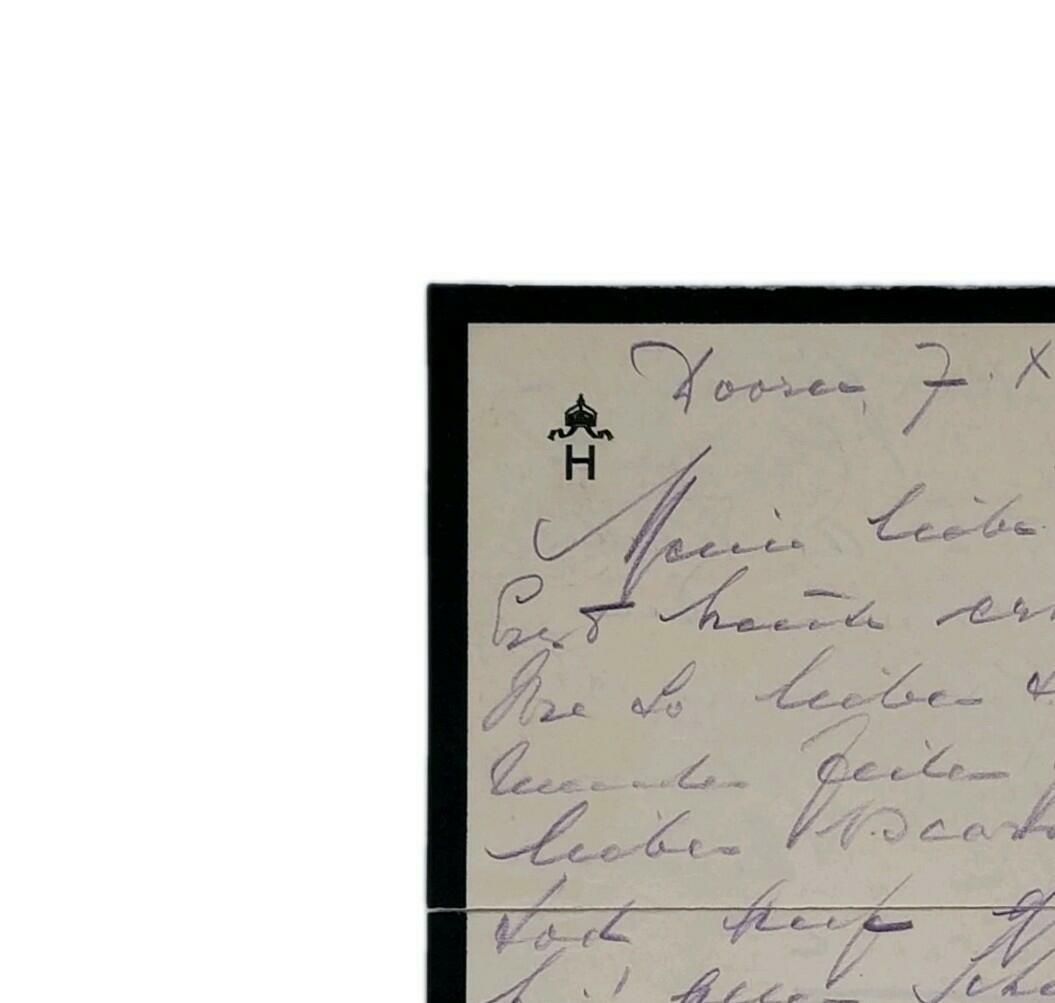
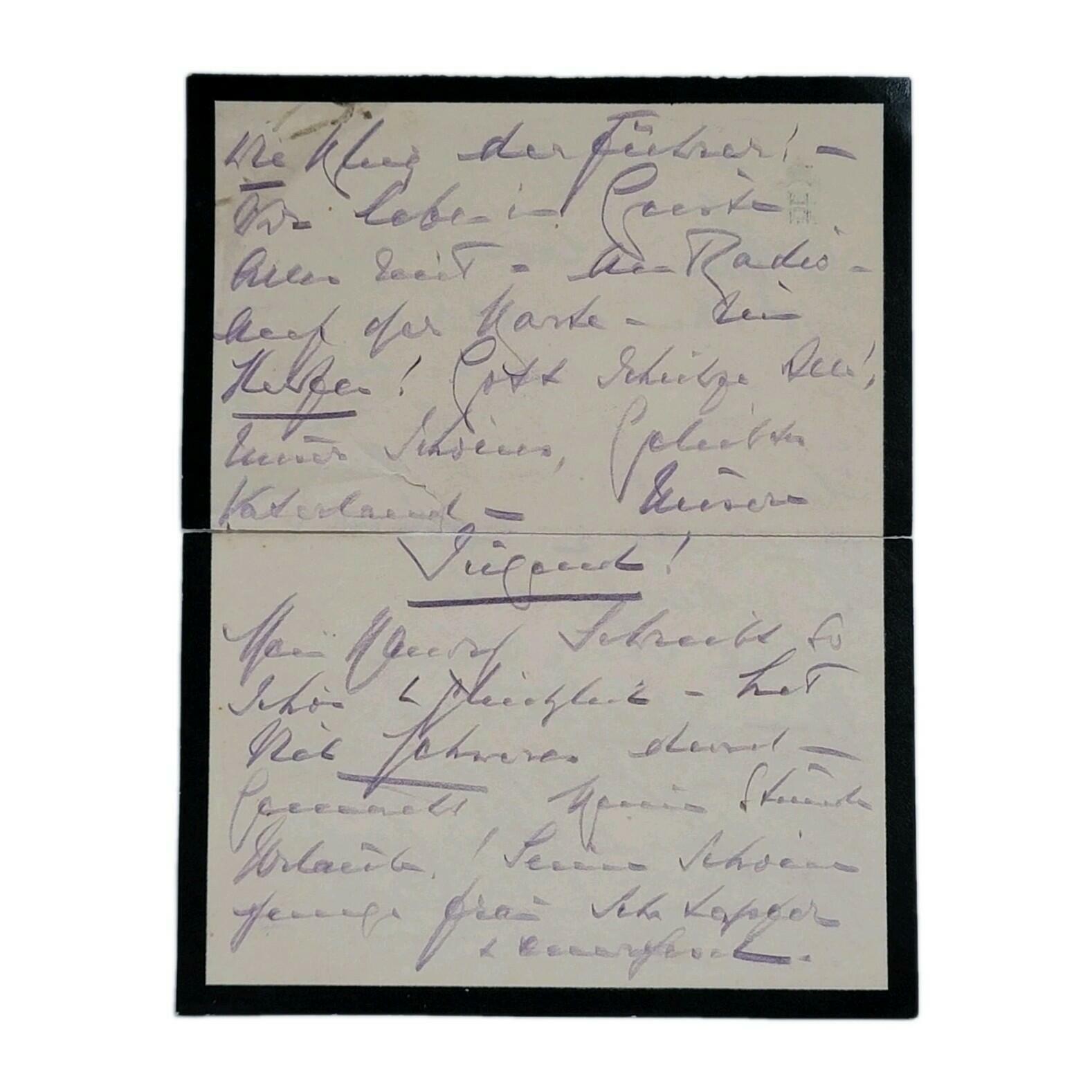
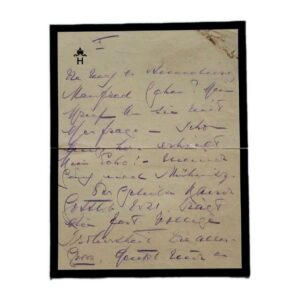
For your consideration, an exceptional original autograph letter entirely handwritten and signed by Empress Hermine Reuss of Greiz (18871947), the last German Empress, written from the imperial exile residence at Huis Doorn, Netherlands, and addressed to Baroness Lorly von Prittwitz-Buddenbrock, a member of one of the most distinguished noble families of Prussia and Silesia. Dated Doorn, 7 October 1935, the letter survives together with its original addressed envelope bearing the typed return designation Aus: Huis Doorn, Niederlande, firmly linking the correspondence to the final chapter of the German Imperial Court following the collapse of the German monarchy.
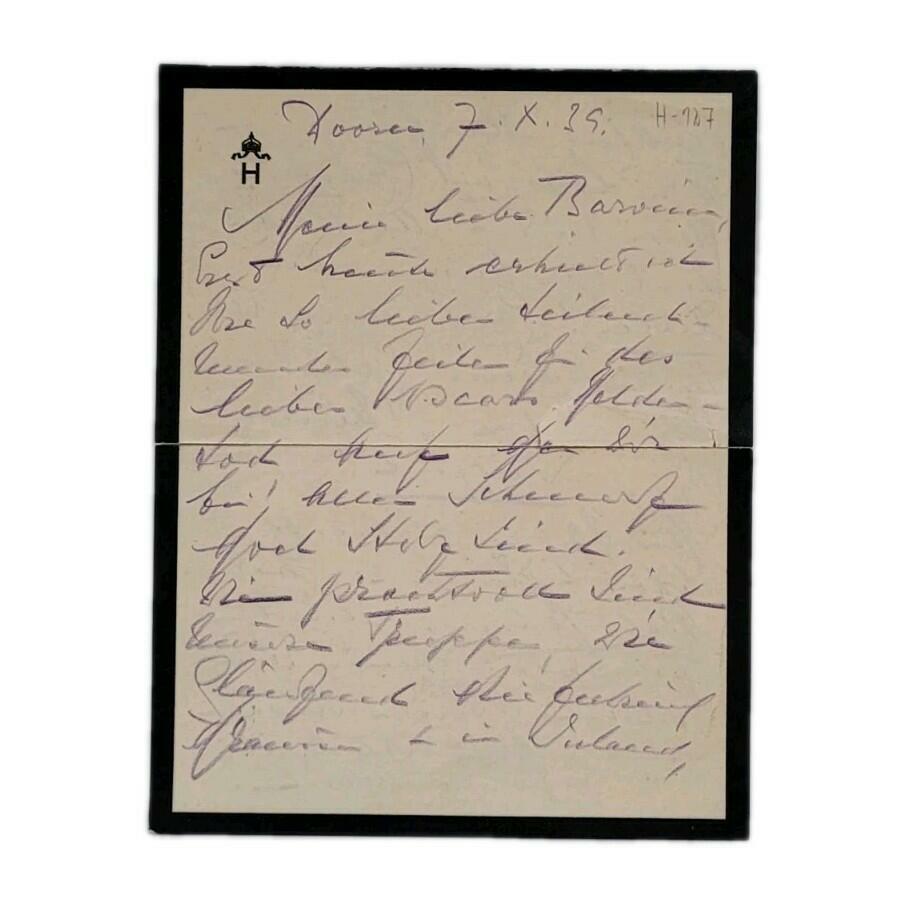
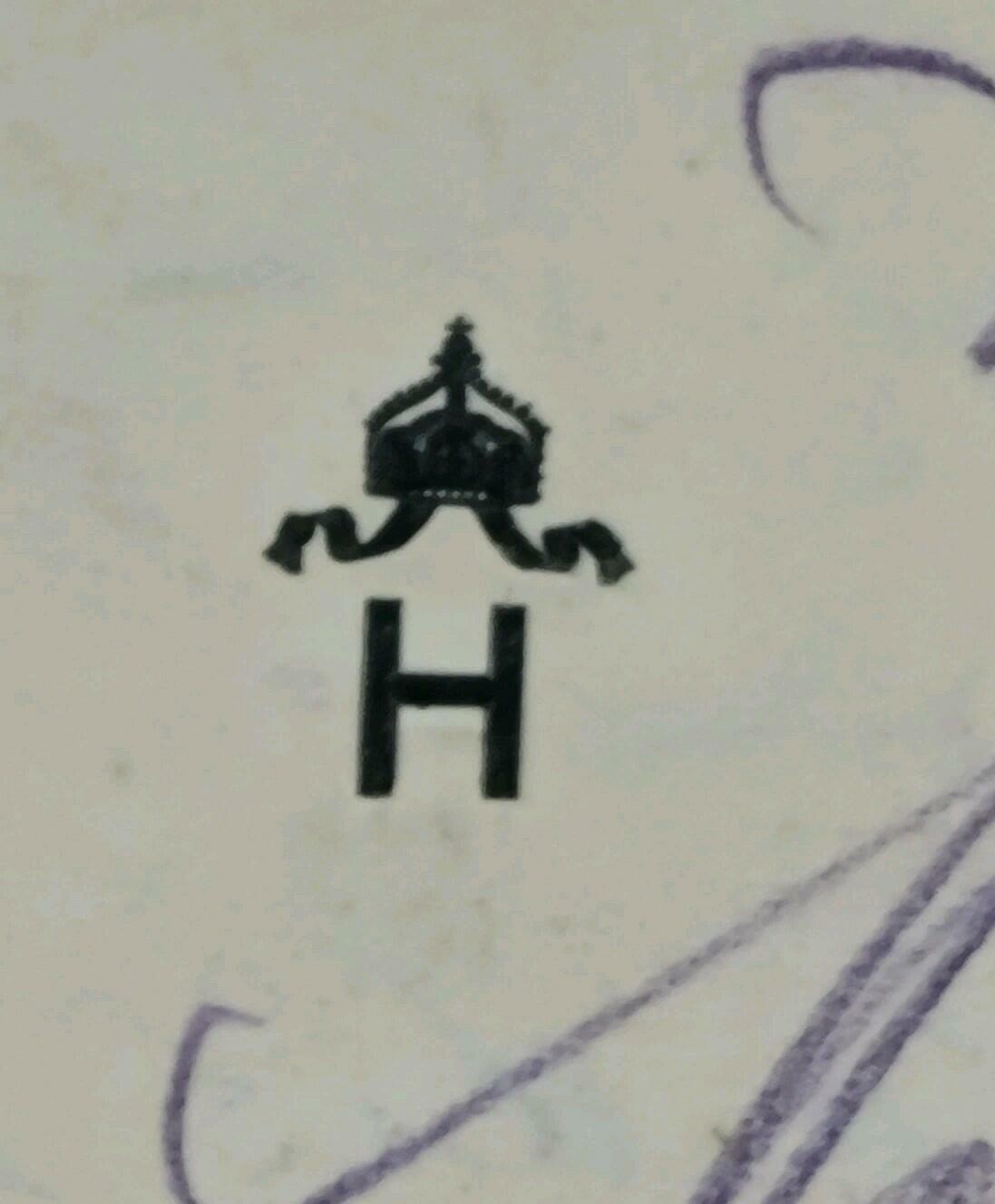
The handwritten letter measures approximately 6 x 7.75 inches, while the original accompanying envelope measures approximately 6.5 x 4.25 inches. Penned entirely in Hermine’s hand on her personal monogrammed stationery bearing the crowned H cipher, the letter offers a rare and intimate glimpse into the private correspondence network maintained by the former Empress during her years at Huis Doorn alongside her husband, Wilhelm II, the last German Emperor. Following their marriage in 1922, Hermine became the final woman in history to hold the title of German Empress, and throughout the interwar period she served as the principal hostess, correspondent, and public face of the exiled Hohenzollern court. Written only six years before Wilhelm II’s death, the present letter belongs to the final phase of the Imperial household’s existence and preserves the authentic voice of one of the most historically significant royal figures of twentieth-century Europe.
The recipient, Baroness Lorly von Prittwitz-Buddenbrock, belonged to the ancient House of Prittwitz, one of the oldest and most prominent aristocratic families of Prussia and Silesia. Correspondence between Hermine and members of Germany’s hereditary nobility documents the enduring personal, social, and monarchist relationships that survived the fall of the Empire and continued to unite former court circles throughout Europe. The content appears to concern personal news, correspondence received, mutual acquaintances, and contemporary developments, illustrating the active communication maintained between Huis Doorn and the wider aristocratic world during the politically turbulent mid-1930s.
The historical importance of the letter is heightened by its date. Written in October 1935, it originates from a period when the former Imperial family remained a subject of intense public fascination and when monarchist hopes, though diminished, still persisted among segments of Germany’s traditional elite. Huis Doorn functioned not merely as a residence but as the symbolic center of the exiled German court, receiving a constant stream of visitors, correspondence, and expressions of loyalty from former officers, nobles, and supporters of the Hohenzollern dynasty. Letters originating from this environment constitute some of the most direct surviving documentary evidence of the social and political afterlife of Imperial Germany.
Unlike the far more commonly encountered signed photographs and presentation portraits of Hermine, the present piece is a substantive personal communication written entirely in her hand and preserved with its original envelope. The survival of both elements together establishes an unbroken documentary connection to the exiled Imperial Court at Huis Doorn and significantly enhances both its research value and desirability. Complete Huis Doorn correspondence of this nature is increasingly difficult to locate, particularly when addressed to an identifiable member of the German aristocracy and accompanied by its original postal cover.
A rare and historically important imperial exile letter entirely handwritten and signed by Empress Hermine, the last German Empress, addressed to a Prussian baroness and preserved with its original Huis Doorn envelope. An evocative relic of the final years of the House of Hohenzollern and a tangible survival from the last chapter of German imperial history. Condition consistent with age and postal use, including original mailing folds, light handling wear, and minor toning; overall exceptionally well preserved for a personal correspondence item from the exiled German Imperial Court.

Reviews
There are no reviews yet.